Search Articles
Key Employee Retention After an Acquisition: How to Spot Flight Risk Before Day 1
Key employee retention starts before signing. Identify who the deal thesis depends on, read why each might leave, and match the retention tool to the reason.
Claude Skills for M&A: Reusable AI Workflows for Deal Teams (2026)
Claude Skills turn your best screening memo, diligence synthesis or Day-1 brief into a repeatable workflow, so every deal gets the same standard regardless of who wrote the prompt.
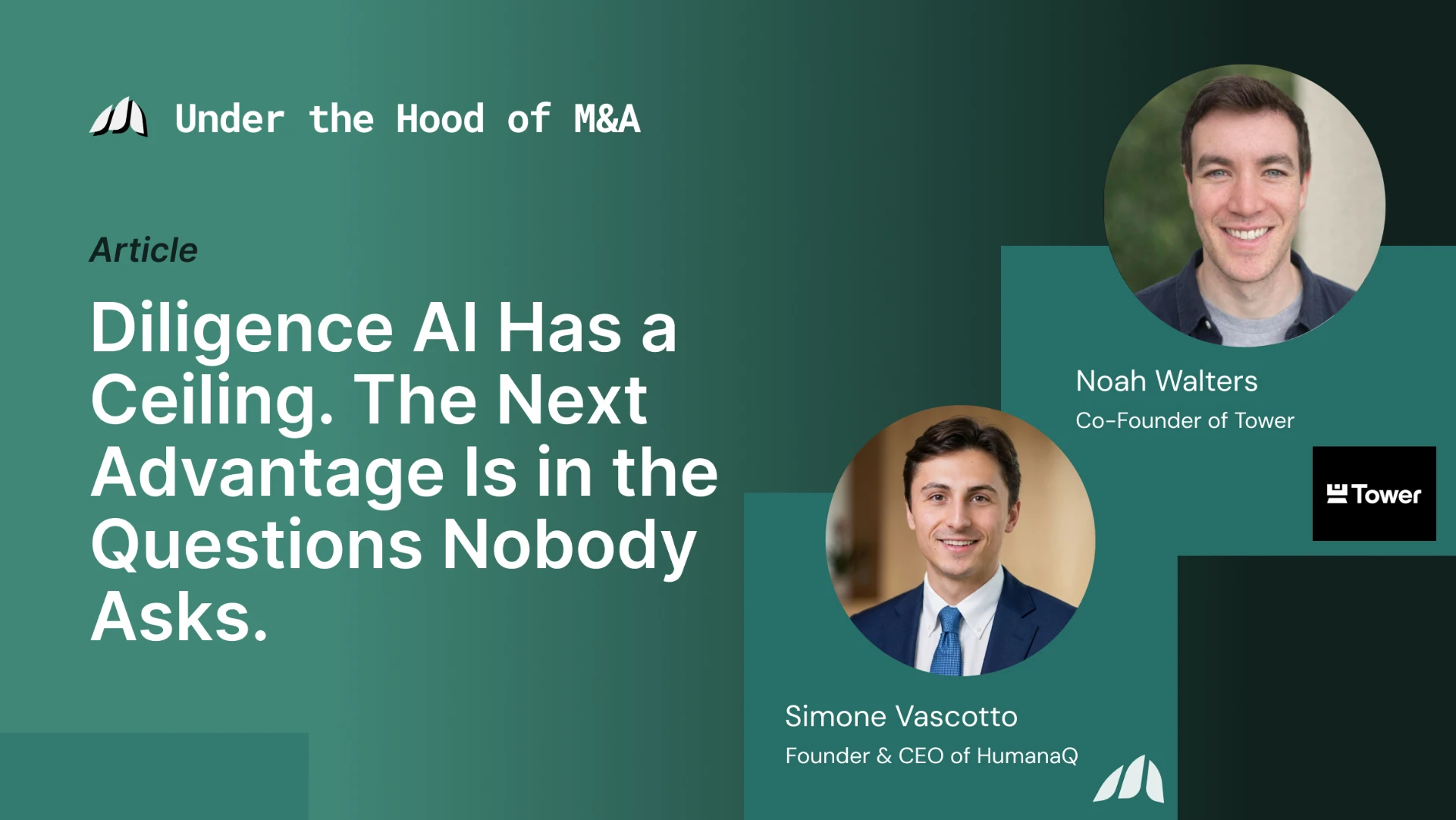
Diligence AI Has a Ceiling. The Next Advantage Is in the Questions Nobody Asks.
A conversation with Noah Walters, M&A lawyer and co-founder of Tower, on why better questions, reliable inputs and behavioral signals are the next advantage in AI diligence.
What Human Capital Intelligence Looks Like at Each Stage of a Deal
Human capital risk is not a single diligence checkpoint. It is a continuous thread that runs from pre-approach through exit, and each stage answers a different question.
Top 3 Reasons Synergy Assumptions Fail, and How Behavioral Data Fixes Them
Synergy assumptions rarely fail because the math was wrong. They fail because the math assumed something about human behavior that was never tested.
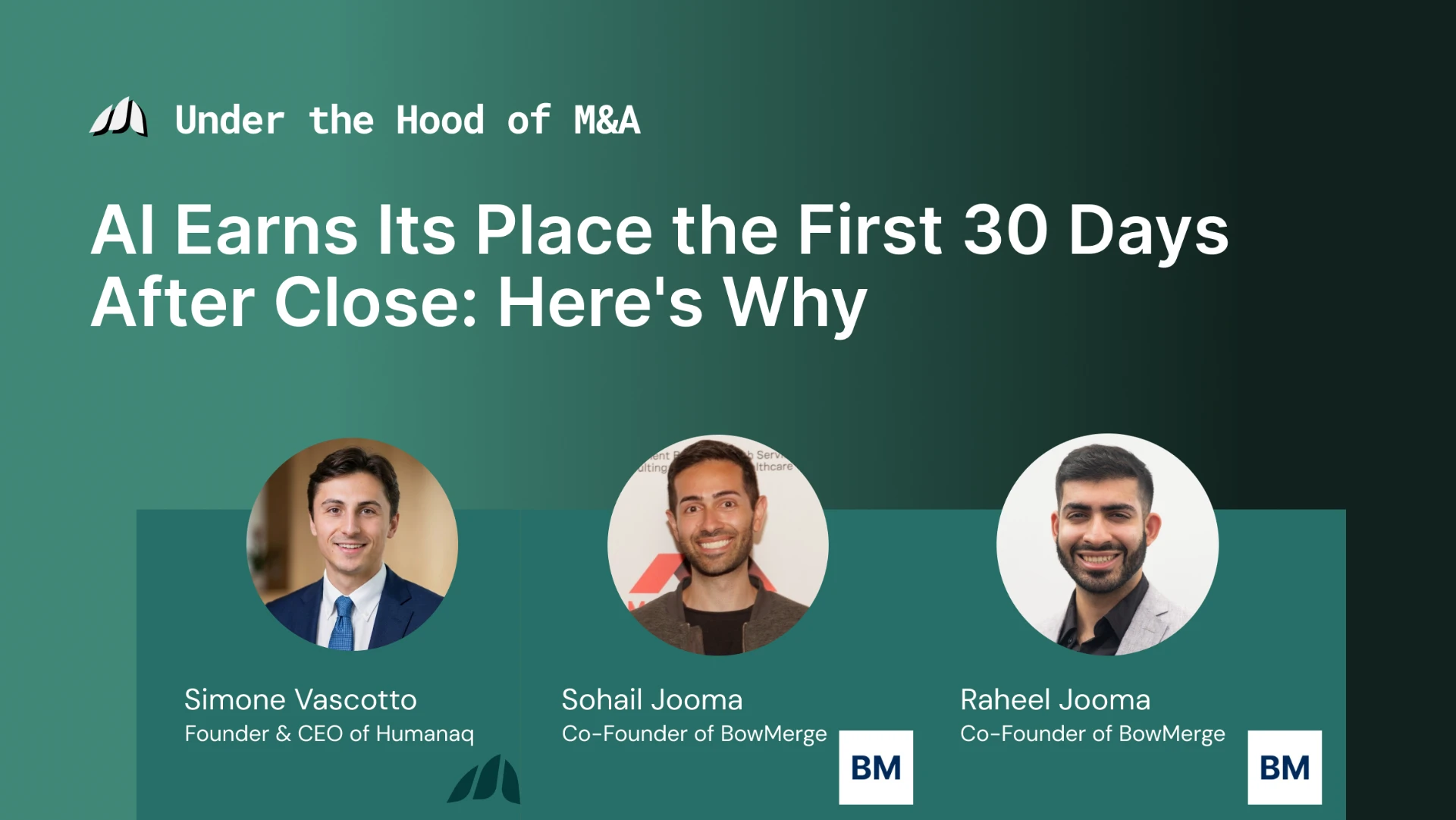
AI Earns Its Place the First 30 Days After Close: Here's Why
The first 30 days post-close decide whether the deal thesis holds or breaks. AI earns its place when operational and behavioral intelligence run continuously, not monthly.
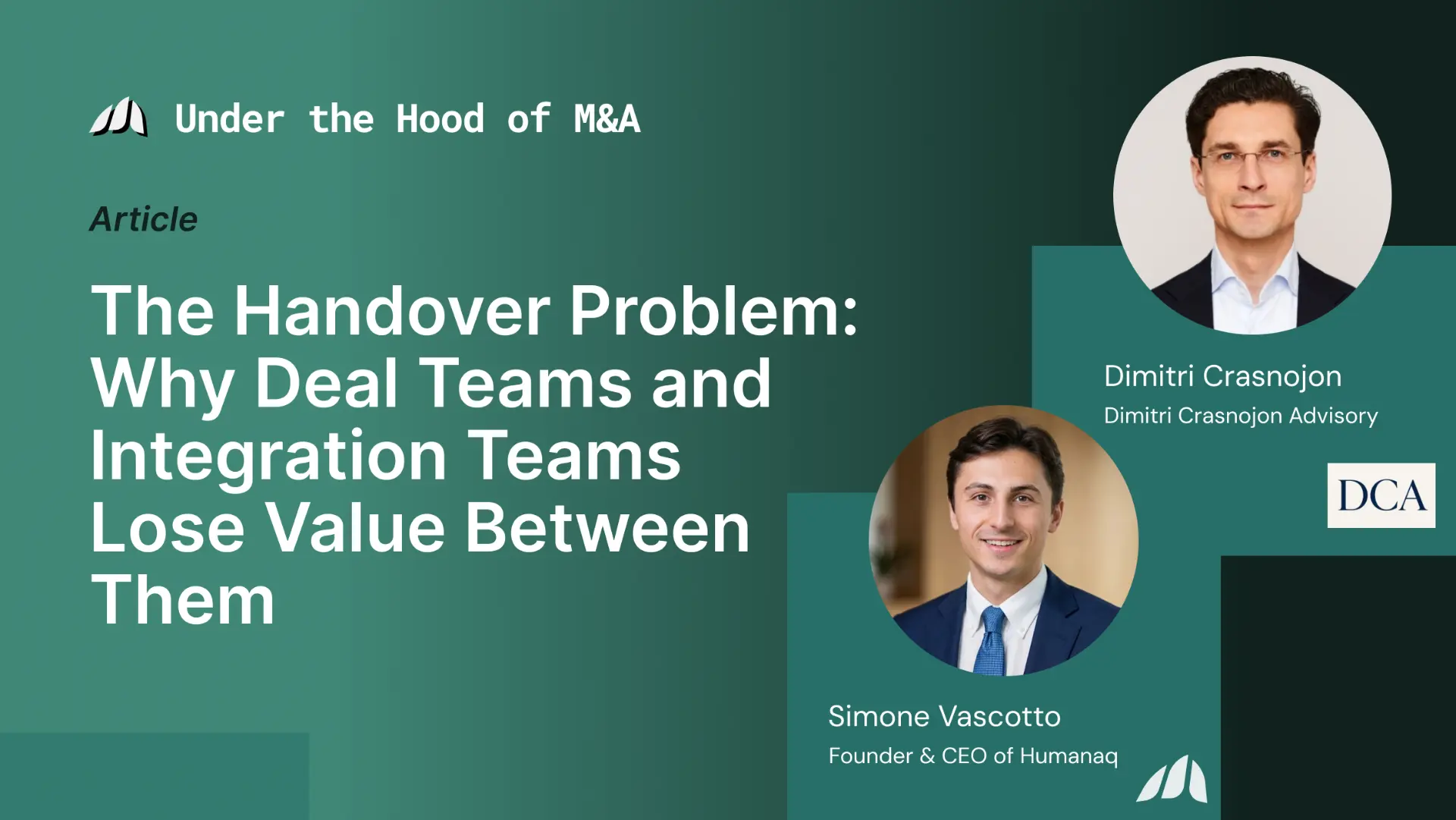
The Handover Problem: Why Deal Teams and Integration Teams Lose Value Between Them
Most deals are run by two teams that barely overlap. The handover problem costs more than most acquirers admit, and it starts earlier than they think.
How to Screen AI Solutions in M&A: A Practitioner's Checklist
Most AI tools in M&A are general models with deal-specific branding. A practitioner's checklist for separating credible tools from expensive noise.
When Is the Best Time for Leadership Behavioral Assessments in M&A?
Behavioral assessment timing determines what the intelligence can do. Pre-LOI shapes decisions; post-close only documents them. A breakdown of every window.
M&A Has Run on the Same Playbook for 30 Years. AI Is About to Force a Rewrite.
The M&A process has remained structurally unchanged since the 1990s. AI is now forcing a rewrite of sourcing, diligence, valuation, and integration.
AI vs. Human in M&A: Getting the Division of Labour Right
AI does not replace judgment in M&A. It exposes it. The acquirers gaining speed are the ones that know precisely where to deploy AI and where to keep humans in control.
Leadership Due Diligence in M&A: Three Methods Compared (And Why Most Fail)
Emotional assessment, cultural assessment, and behavioral data. Why only one approach survives the compressed timeline and limited access of a real M&A process.
Why Integration Software Fails: The Execution Definition Gap
How AI Has Rewritten the M&A Playbook: A Breakdown
The Executive Guide to Post-Merger Integration: Managing Execution Risk
The AI in M&A Playbook: What Practitioners Need to Know in 2026
What Claude Cannot Do in M&A: An Honest Assessment
Operationalizing AI in M&A and Private Capital: A Guide
The AI Playbook for M&A 2026
Post-Merger Integration Tools for Private Equity: What's Missing in 2026
Why Execution Behavior Is the Next Value Creation Lever in Private Equity
AI Is Making M&A Faster on the Surface and Riskier Underneath
Same Values Does Not Mean Same Culture. Here Is What Actually Predicts Integration Success.
Why AI Has Been Slow in M&A Due Diligence (And What Just Changed)
The Rise of Predictive Analytics in M&A: From Signals to Deal Outcomes
How Does a People-Centric Approach Drive Growth Synergies in M&A?
The Biggest Opportunities and Challenges for M&A in 2026
Why Anchoring Behavioral Data to the Deal Thesis Changes Everything
Cultural Due Diligence vs Behavioral Due Diligence: What Is the Difference?
Behavioral due diligence is not a replacement for cultural due diligence. It is the measurement layer that makes cultural due diligence rigorous. Culture is the collective expression of how an organization operates. Behavior is what culture is made of.
Cultural Due Diligence With AI in M&A in 2026: What Has Changed and What It Now Produces
Cultural due diligence in M&A has had a credibility problem for decades. AI has changed the three constraints that caused it: speed, objectivity, and format. Here is what AI-powered cultural due diligence now produces and why deal teams are using it differently in 2026.
How to Keep Up With AI in M&A in 2026: The Practitioner's Guide
AI in M&A is moving faster than any individual practitioner can track alone. The ones staying ahead are not reading more reports. They are in the right conversations. Here is where to focus, what to track, and where the community doing this work seriously lives.
Cultural Due Diligence Is Worthless Unless It Connects to These Six Decisions
Cultural due diligence has a credibility problem. Not because it is wrong, but because it rarely connects to the six decisions that determine whether a deal delivers. Here is how to operationalize it.
What AI Can See in the First 100 Days Your Integration Team Cannot
The first 100 days lock in how an organization executes under pressure. AI-powered behavioral analysis surfaces integration risk at Day 30 instead of Day 90, giving deal teams a 60-day intervention window before damage becomes financial.
How to Avoid Value Destruction in M&A with AI
Value creation and value destruction happen in parallel in every M&A deal. AI-powered behavioral intelligence makes both runners visible in real time, shifting integration management from post-damage discovery to pre-damage prevention.
How to Use Claude in M&A: A Practical Guide for Deal Professionals
A practitioner's guide to using Claude across the M&A deal lifecycle: target screening, diligence synthesis, IC preparation, integration planning, and stakeholder communication. Real prompts, real applications, clear limits.
AI Is Changing M&A. Here Is What Is Actually Different.
AI in M&A is no longer theoretical. It is operational. A practitioner-focused breakdown of where the change is real across sourcing, modelling, diligence, behavioral assessment, and integration, and where it is still marketing.
AI in M&A Community: Why This Group Exists and Who It's For
Deal processes are changing with AI. AI in M&A, part of Under the Hood of M&A, is the LinkedIn group where practitioners share which AI tools are doing what in deal workflows, where, and whether it is worth it.
The One Thing Missing From Every AI Tool in M&A
After more than a year of building AI tools in M&A, one theme keeps surfacing: the gap between what AI can process and what it actually understands. A conversation with Gwen Pope of Tiger Team M&A on deal thesis continuity, the messy middle, and why context beats speed.
How to Prompt AI for M&A: Why the Framing Matters More Than the Question
Generic AI prompts produce generic M&A analysis. This guide shows how framing prompts with deal thesis, assumptions, and financial anchors transforms AI output from background research into deal intelligence.
How to Build an M&A Model Faster Using AI: Tools and Workflow
AI compresses M&A financial modeling from weeks to days. This guide breaks down which AI tools to use at each stage, data extraction, normalization, model build, assumption setting, and scenario analysis.
Behavioral Data in M&A: What It Should Actually Tell You
Most behavioral assessments in M&A produce data that is interesting but not actionable. The problem is not the data. It is the translation layer between what the behavioral patterns show and what the deal team needs to decide.
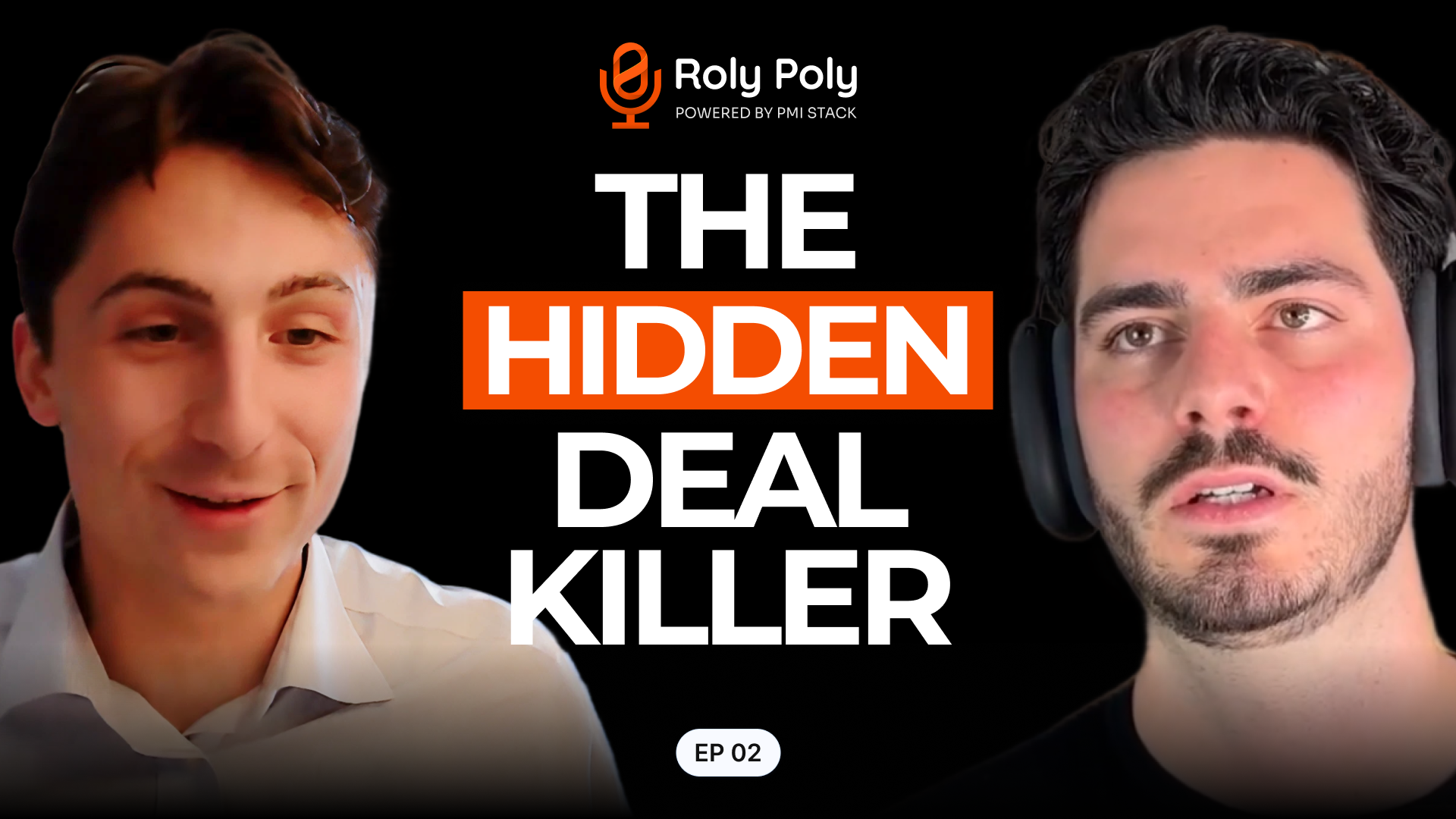
Why Most Acquisitions Fail and How Behavioral Analytics Stops It
From the Roly Poly podcast: Dylan Harrocks interviews Simone Vascotto on why 70-90% of acquisitions fail to meet objectives, and how AI-powered behavioral analytics can identify cultural risk before close.
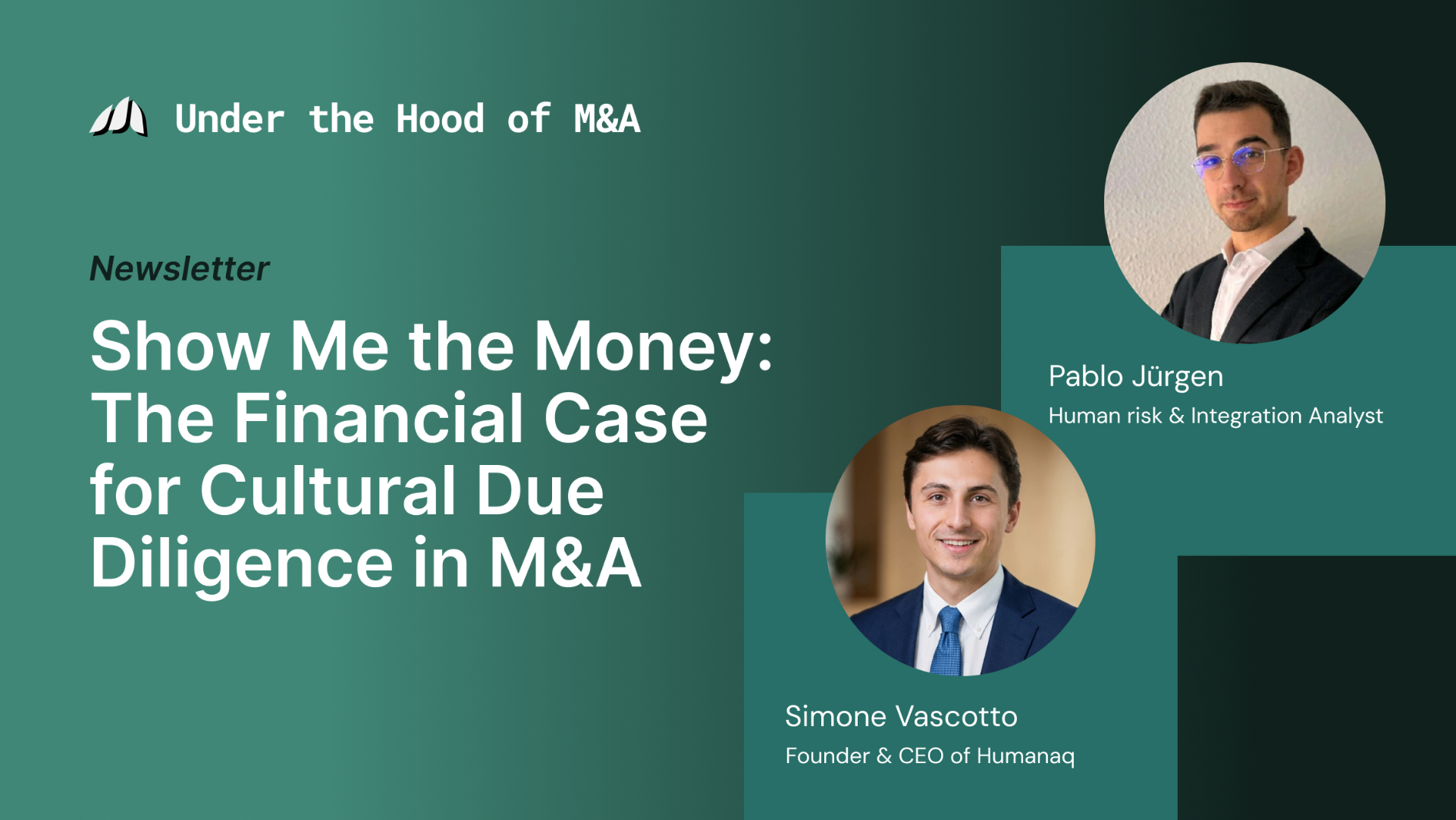
Show Me the Money: The Financial Case for Cultural Due Diligence in M&A
Cultural due diligence is not a people initiative. It is a financial one. The data connecting behavioral compatibility to deal returns is now specific enough that leaving the behavioral layer unassessed carries a quantifiable cost.
Beyond the Balance Sheet: Why Culture Is the Missing Due-Diligence Layer in M&A
Most M&A conversations revolve around valuation, financial health, and risk. Yet more than half of acquisitions fail to meet expectations because culture was never part of due diligence.
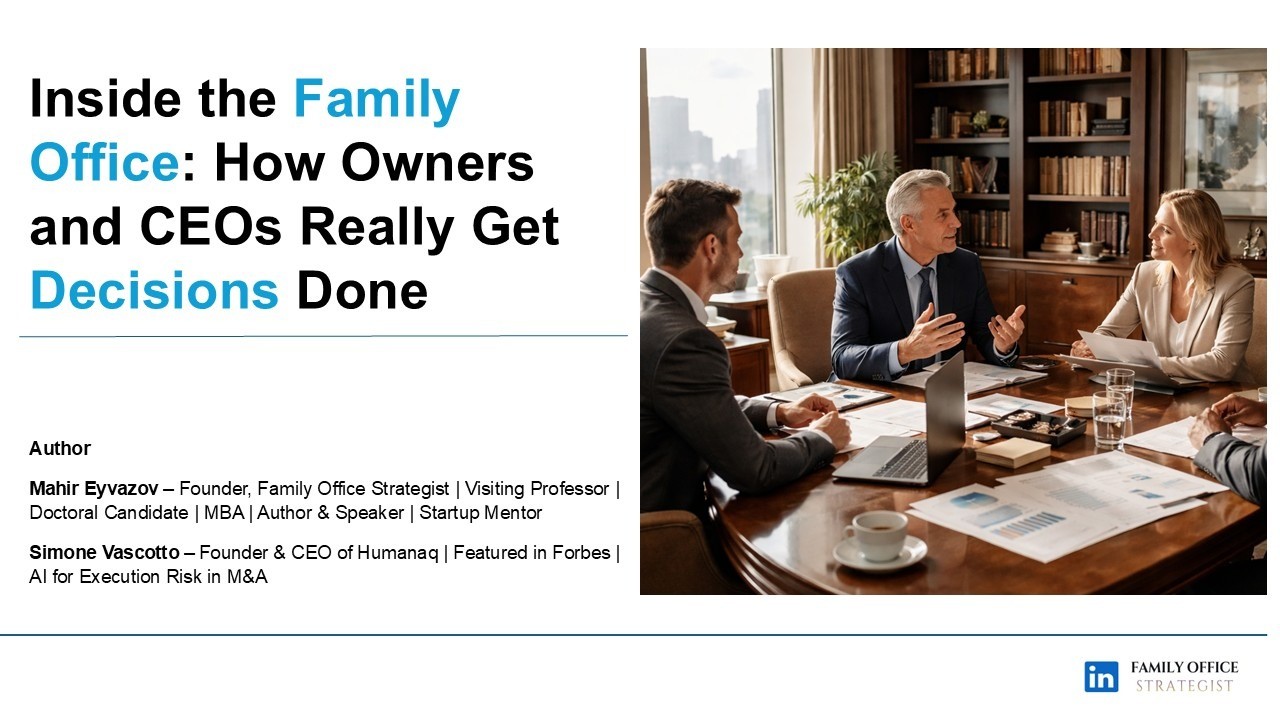
Inside the Family Office: How Owners and CEOs Really Get Decisions Done
How decision rights, informal authority, and family dynamics shape execution and why these patterns determine whether external CEOs and partners succeed or fail.
Cognitive NLP in M&A: Why Behavioral AI Is Different From Every Other AI Tool in Your Deal Stack
Why Cognitive NLP measures what standard AI tools cannot: the behavioral execution layer that determines whether deal theses get delivered.
AI in M&A: How Behavioral Analysis Predicts Integration and Execution Risk
How AI-powered behavioral analysis reveals execution risk across the deal lifecycle, from cultural due diligence through value creation.
What Is Behavioral Due Diligence in M&A?
The complete guide to measuring execution risk before a deal closes and why it predicts ROI more accurately than financial diligence alone.
The Best AI Solutions for M&A in 2026
A practitioner's guide to the tools reshaping how deals get sourced, diligenced, and integrated and where each one fits in the deal lifecycle.

Culture Is a Measurable Value Driver in M&A
Why the chain from behavior to ROI is shorter than most deal teams think and what it means for how you assess deals.
Top 5 Execution Behaviors to Monitor in M&A for Value Creation
The behavioral dimensions that most consistently determine whether a deal delivers its projected value, and what to do when they are missing.
Cultural Due Diligence: 5 Reasons Why It Can Never Be a Checklist
The case against standardized cultural assessment and what rigorous behavioral analysis actually requires.
Cultural Due Diligence: Why It Can Never Be a Checklist
The case against standardized cultural assessment, and what rigorous behavioral analysis actually requires.
What Do Execution Patterns Reveal in M&A?
How the six dimensions of workplace behavior interact, and what the patterns mean for execution, integration, and ROI.
How Is AI Changing Cultural Compatibility in M&A?
AI cultural compatibility analysis is changing how deal teams measure behavioral risk. A deep look at the methodology, the science, and where it fits in the deal process.
HumanaQ vs Traditional Culture Diligence Methods
Why the old approach is costing deals. A direct comparison of behavioral due diligence against conventional culture assessment approaches in M&A.
Best Services to Predict Cultural Fit in M&A in 2026
A practitioner's guide to behavioral due diligence, cultural compatibility diagnostics, and execution risk assessment for deal teams. Updated July 2026.

Reverse Due Diligence: Why Smart Buyers Let Targets See Inside
Reverse due diligence is the deliberate act of opening your organization to the target before close so the people coming in understand how the puzzle pieces fit together. Not because it is generous. Because it is strategically rational.
Who Actually Needs Behavioral Execution Risk Intelligence?
Not every deal needs cultural due diligence. But when your value creation thesis runs through leadership continuity, decision-making velocity, and governance alignment, behavioral risk becomes material and deserves formal assessment before close.
Best Buy-Side Cultural Fit Platforms for RIA Acquisitions (2026)
A 2026 buy-side ranking of the cultural and execution-focused platforms used in RIA acquisitions, scored on their ability to predict advisor retention, leadership alignment, and integration risk before close.
Why Does Value Erode in M&A Before Integration Even Begins?
EBITDA erosion is not value that has vanished. It is value that cannot be accessed because the organisation cannot reliably deliver what the numbers require. The constraint typically sits in deeply embedded beliefs about how the organisation actually functions.
What Is the M&A Value Creation Shift in 2026?
There is a growing awareness across M&A that the current value creation model is no longer delivering what it promises. The underperformance is structural, rooted in assumptions the M&A model has carried forward largely unquestioned.
How is HumanaQ Different to Traditional Cultural Due Diligence?
Cultural due diligence has been part of M&A conversations for decades. Yet cultural misalignment remains one of the most consistent drivers of value erosion in integrations. The issue is not lack of intent, it is a mismatch between what traditional culture diligence measures and what actually determines execution outcomes.
Why Alignment Breaks During M&A Integrations and How to Close the Gap
Integrations rarely fail because leaders lack insight. They fail because alignment is assumed to survive contact with execution.
Top 5 Methods to Run Cultural Due Diligence in M&A
Execution failure is rarely sudden, it's cumulative and preventable. Here are 5 distilled methods big players use to run execution risk and human capital diligence.
Cultural Due Diligence: Measuring The Invisible Culture
Simone Vascotto joins The Future of the Future podcast to discuss how HumanaQ measures the invisible, unconscious behaviors that define organizational culture, and why this matters for M&A success.
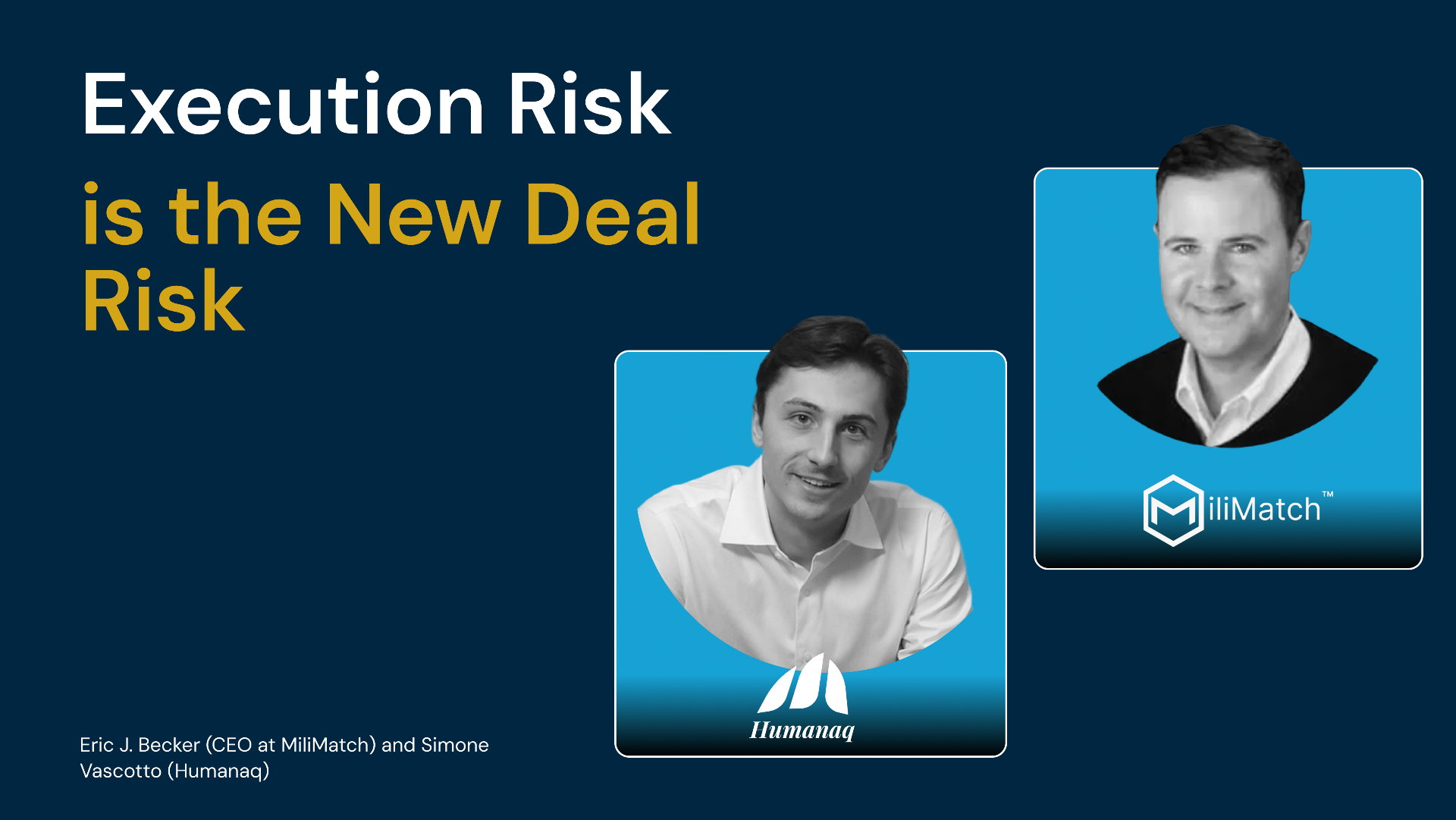
Execution Risk Is the New Deal Risk in M&A (Part 1)
Most deals don't fail in the data room. They fail after approval, when confidence is high, capital is committed, and coordination quietly starts to fracture.
Integration Debt: The Silent Erosion of Deal Value
Most deals don't fail because the strategy was wrong or the financial model was off. Deals fail to create value because the erosion of trust and alignment begin long before anyone notices.
Closing the Private Equity Performance Gap: Cultural Intelligence and Strategic Decisioning for M&A
Private equity M&A performance is polarized. Programmatic acquirers with mature capabilities now generate 130% higher returns than non-acquirers. This analysis explores how cultural intelligence and strategic orchestration close the execution gap.

HumanaQ Featured in Forbes for Redefining Culture in M&A
We're proud to share that HumanaQ has been featured in Forbes as part of the article 'The 3 Culture-First M&A Strategies Every Acquirer Should Know.' The feature highlights a major shift happening in M&A, one where culture is no longer considered a soft factor, but a measurable determinant of deal success.

HumanaQ in Forbes: The 3 Culture-First M&A Strategies Every Acquirer Should Know
Discover three essential culture-first strategies that top M&A acquirers use to drive deal success and avoid costly integration failures.
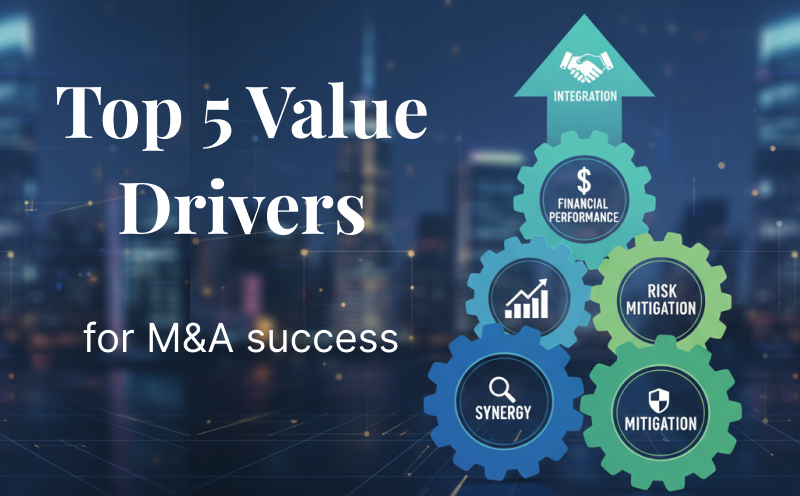
Top 5 Value Drivers for M&A Success
M&A has evolved from episodic to algorithmic. Here are the five critical value drivers that separate transformative deals from disappointing ones.
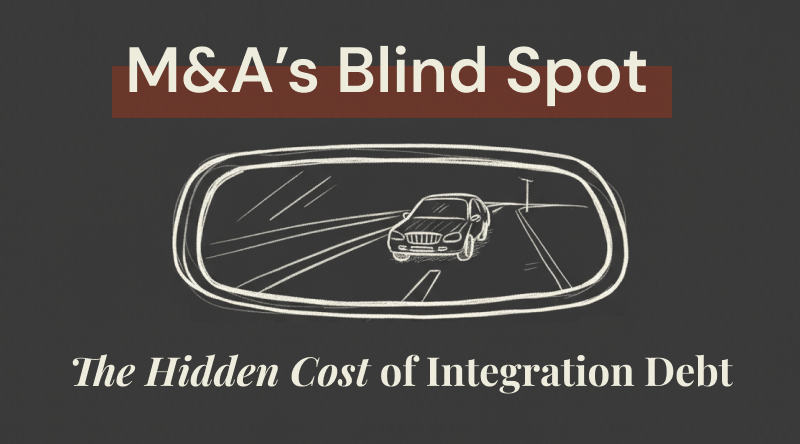
M&A's Blind Spot: The Hidden Cost of Integration Debt
Every year, companies spend trillions on M&A, yet most deals miss their financial targets. The quieter failure isn't market shifts or overvaluation, it's human misalignment and integration debt.

Why Organisational Culture Is Always Top Down
Culture follows power, not posters. Leaders model what is rewarded, tolerated, and punished, and their behaviors form the true cultural blueprint that others copy.

Swiss Business School (SBS) Barcelona Supports HumanaQ as an Alumni Venture
HumanaQ announces a new collaboration with Swiss Business School Barcelona, establishing a shared commitment to advancing innovation in M&A and organizational culture.

Cultural Due Diligence: The Closest Thing to a Guarantee For Search Funds
Most Search Fund acquisitions target founder-led SMEs where culture is the founder. Measure behavioral risk before the identity vacuum hits.
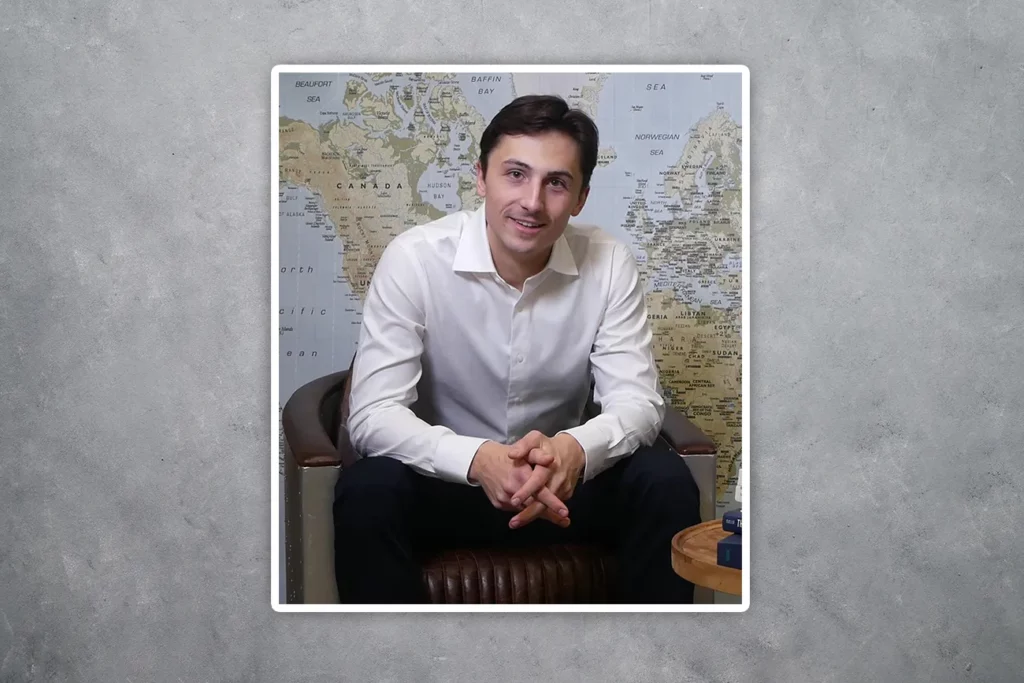
Cultural Due Diligence: Measuring What Makes Deals Work
Cultural Due Diligence will rarely be a critical factor in whether to 'do the deal' or not, but rather a significant factor in making the deal work.
What HumanaQ Is, What It Is Not, and Why the Distinction Matters
HumanaQ is a behavioral intelligence platform built for the M&A deal lifecycle. Not an HR tool, not an engagement survey, not a culture program. Here is what it is, what it is not, and why the distinction determines whether the intelligence actually changes deal outcomes.

What Breaks in M&A Can't Be Seen on a Spreadsheet
The most expensive problems in M&A don't show up in due diligence. They show up six months later, when key people walk out the door.
How AI is Transforming M&A, and Why Culture is Next
AI is changing how deals get done. But the next frontier isn't financial, it's cultural. Here's why culture is becoming measurable, and what that means for M&A.
New M&A partnership acts as "The PitchBook for Culture"
What happens when data meets culture? Explore how integrating cultural intelligence with M&A tools like Pitchbook transforms deal sourcing, diligence, and integration success.

The Silent Succession Crisis: Why Heirs Lose Interest in Legacy Family Businesses
Discover why thousands of founder-led businesses face a silent succession crisis, and how cultural due diligence helps identify leadership gaps and safeguard continuity in transitions.

Green on the Dashboard. Red in Reality.
When financials look healthy but post-merger performance drops, the issue is often cultural. Learn how HumanaQ detects hidden human risks before they impact deal value.
CDD: Why it's skipped & the typical chain reaction
Cultural due diligence is often skipped, but it's where most M&A failures begin. Find out why deal teams overlook it and the costly chain reactions that follow.

Exit Planning: Why NEEDING to Sell Is a Failure
Many founders sell under pressure, not by choice. Learn how cultural and leadership misalignment can turn succession into crisis, and how early due diligence prevents it.
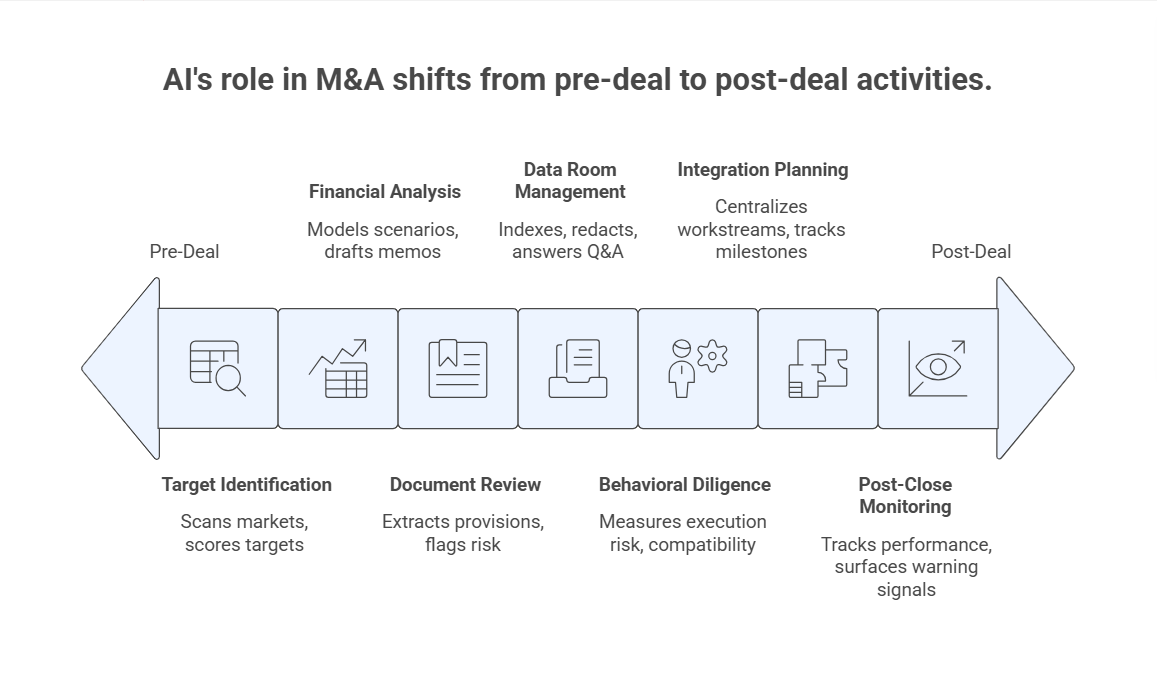
How Is AI Being Used in M&A? A Practitioner's Breakdown
The stages, the applications, and who is deploying them. A clear breakdown of how AI operates at each stage of the M&A deal lifecycle.
M&A Was Once a Transaction. It's Becoming an Architecture Tool.
M&A is shifting from a reactive transaction to a deliberate architecture tool. The best acquirers now design relationships, diligence, capability, and execution before capital commits.